01
Cost is fragmented
Provider usage, licences, integration, human review, rework and incident costs can sit in different systems and ownership structures.
Value Control connects evidence from AI platforms, enterprise workflows, governance controls and finance systems so each initiative can progress from forecast value to observed outcomes, approved attribution, finance validation and risk-adjusted portfolio action.
Licences, models and agents can enter production before an organisation has agreed the baseline, loaded the full cost, assigned a Benefit Owner or approved how an observed change will be attributed. Value Control keeps those distinctions visible.
Provider usage, licences, integration, human review, rework and incident costs can sit in different systems and ownership structures.
An operational measure can move after deployment without establishing what changed, why it changed or whether the comparison basis remained valid.
Software can assemble evidence and calculations. Business and finance owners still determine whether the benefit is attributable, recognised and decision-relevant.
A calculation does not become a recognised benefit merely because more data is available. Each state requires a defined evidence basis and an accountable decision.
A planned benefit based on stated assumptions, target measures and expected dependencies.
A measurable operational change has occurred against an approved baseline.
An approved method links an appropriate share of the observed change to the AI initiative.
Finance reviews the benefit definition, cost treatment, calculation and recognition basis.
Approved correction cost, uncertainty and governance risk are applied for portfolio review.
Value Control preserves the current state, evidence lineage and approval record. It does not advance an initiative through these stages without the organisation's authorised review process.
Coverage depends on the sources the customer authorises, the quality of those records and the mapping agreed during implementation. Missing or unmatched evidence remains visible rather than being guessed.
These genuine product captures demonstrate two inputs to the Value Control method. They are not customer results and do not independently show finance validation or realised ROI.
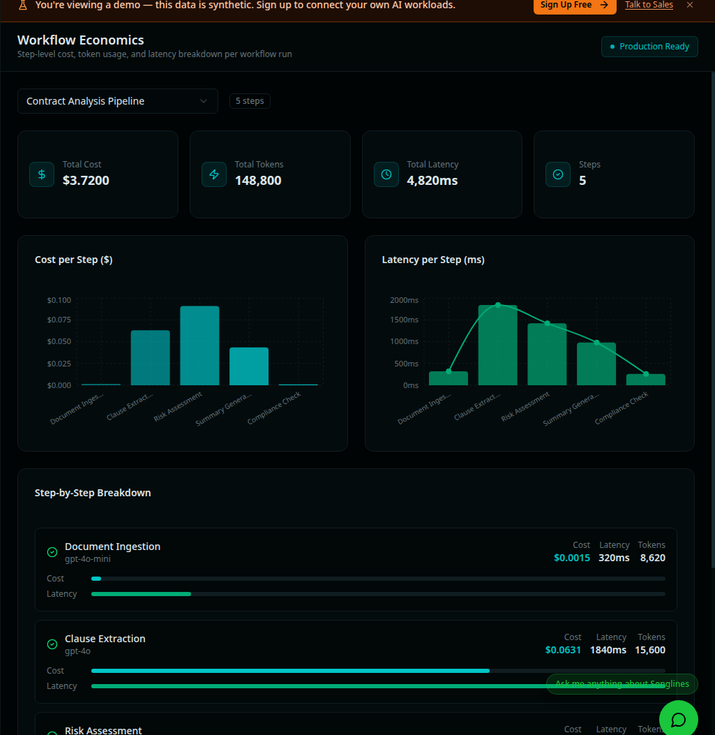
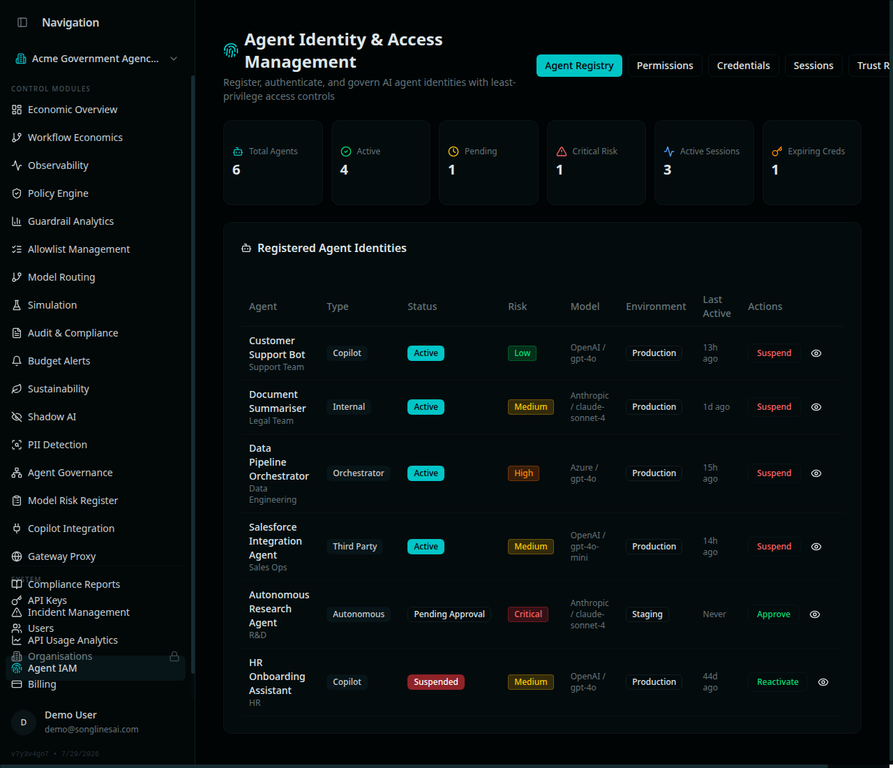
Each organisation defines its accounting policy, benefit category, attribution approach, materiality threshold and risk treatment. Value Control supports the working record and approval flow.
Cost basisCustomer-approved usage, licences, implementation, integration, change, review, rework, incident and correction costs within the selected scope.
Outcome basisAn observed measure compared with an approved baseline, adjusted through an agreed attribution method and reviewed by the accountable business and finance owners.
Decision basisFinance-validated benefit less fully loaded cost and the organisation's approved risk or correction adjustments. The treatment remains organisation-specific.
Value recognition is cross-functional. The system helps each role work from the same defined scope without collapsing their responsibilities into one automated score.
Supplies solution configuration, usage, performance and technical dependency records.
Owns the baseline, intended outcome, process change and operational benefit.
Reviews cost treatment, attribution, benefit recognition and calculation basis.
Records risk, exceptions, oversight evidence and the accountable portfolio decision.
Calculated recommendations remain distinct from decisions recorded by authorised people.
Value Control can work with customer-approved exports or scoped mappings from finance systems, cloud platforms and FinOps tools. Examples may include Apptio, CloudZero, Finout and internal finance extracts. Provider credentials, fields, allocation rules and data quality are validated for the selected implementation.
These names identify potential source systems, not certified native integrations or customer-validated deployments. The source method is confirmed during discovery.
A bounded pilot begins with one workflow, one approved baseline, one cost source and one accountable finance owner. Scope and timing are confirmed after source and workflow discovery.
Define the workflow, intended outcome, current portfolio question and authorised owners.
Identify the cost, operational, policy, incident, human-review and finance records available.
Record the comparison period, measure, target, assumptions and material dependencies.
Agree how observed change will be linked to the initiative and how alternative causes are treated.
Map the required records and approvals to each progressive value state.
Present the current evidence basis and record Scale, Optimise, Review or Retire with an owner and next date.
The Value Control method aligns with established guidance that benefits require measurable evidence, an approved baseline, accountable ownership and continuing review, while technology value is managed collaboratively across engineering, finance and business teams.
Start with one selected workflow and establish the evidence, finance review and decision cadence needed before broader rollout.